copick convert seg2mesh
utils
Convert segmentation volumes to meshes using marching cubes.
Plugin command — copick-utils
This command is provided by the copick-utils plugin, not copick core. Install it to make this command available:
See the plugin system guide for details.

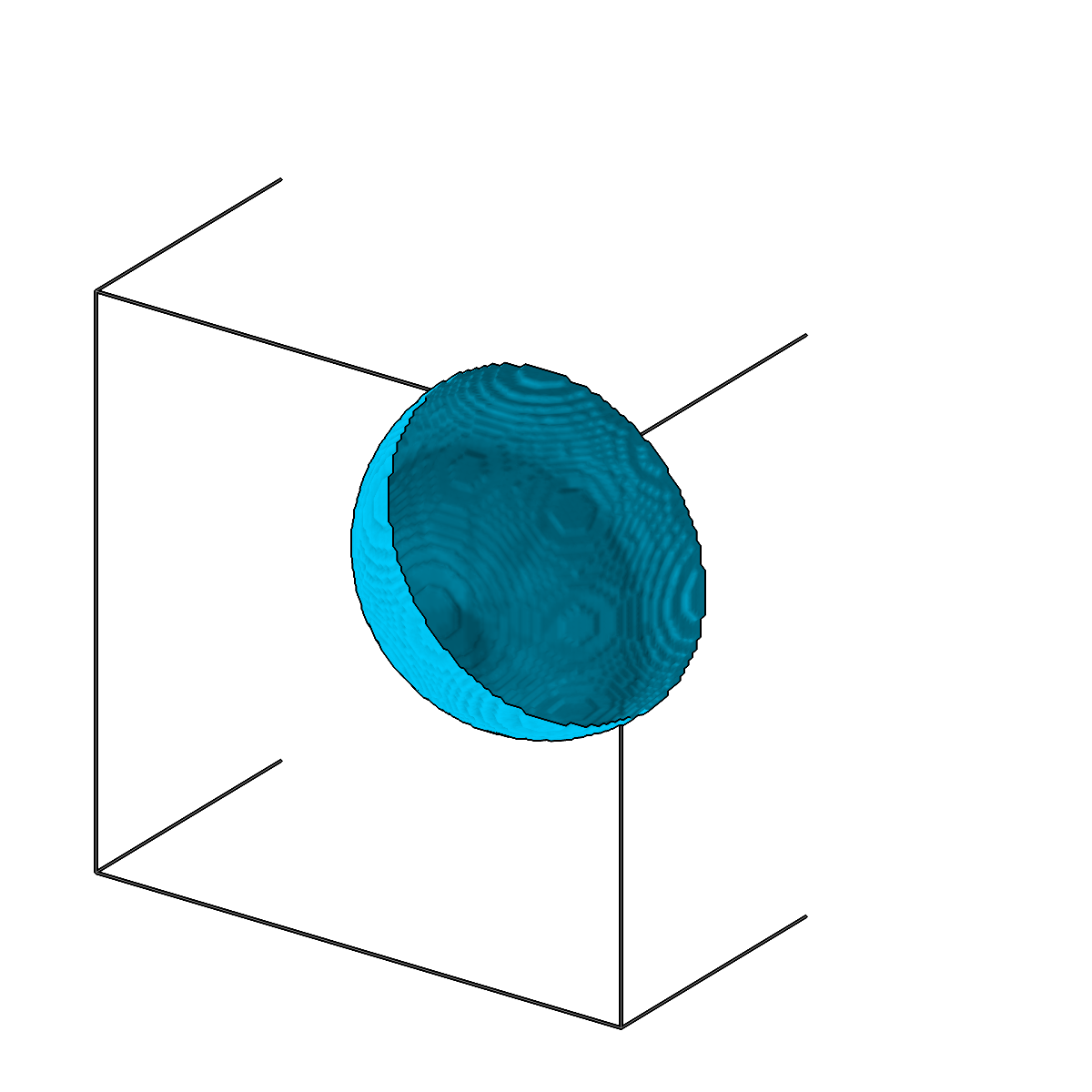
Convert segmentation volumes to meshes using marching cubes.
Usage
Description
Runs the marching cubes algorithm on one or more segmentation volumes to produce triangulated surface meshes. Input segmentations are selected by URI (with optional regex/pattern matching on the user and session ids), and the resulting meshes are written using a templated output URI.
Use --individual-meshes to emit a separate mesh per instance label (this enables the
{instance_id} placeholder in the output URI); otherwise a single mesh is produced per
matched segmentation. The --level and --step-size options control the marching cubes
iso-level and the sampling step (larger steps are faster but coarser).
URI Format
Options
| Option | Type | Default | Description |
|---|---|---|---|
-c, --config |
path | — | Path to the configuration file. |
--run-names, -r |
text · multiple | — | Specific run names to process (default: all runs). Repeatable; pass -r once per run. |
--debug / --no-debug |
boolean flag | False |
Enable debug logging. |
Input Options
| Option | Type | Default | Description |
|---|---|---|---|
--input, -i |
COPICK_URI | required | Input segmentation URI (format: name:user_id/session_id@voxel_spacing). Supports glob patterns. Append ?instance=true or ?panoptic=true to read those segmentation types. |
Tool Options
| Option | Type | Default | Description |
|---|---|---|---|
--level |
float | 0.5 |
Isosurface level for marching cubes. |
--step-size |
integer | 1 |
Step size for marching cubes (higher = coarser mesh). |
--workers, -w |
integer | 8 |
Number of worker processes. |
Output Options
| Option | Type | Default | Description |
|---|---|---|---|
--output, -o |
COPICK_URI | required | Output mesh URI. Supports smart defaults (e.g., "membrane", "membrane/my-session", or "/my-session"). Full format: object_name:user_id/session_id. |
--individual-meshes, -im / --no-individual-meshes |
boolean flag | False |
Create individual meshes for each instance (enables {instance_id} placeholder). |
Examples
# Convert single segmentation to mesh
copick convert seg2mesh -i "membrane:user1/manual-001@10.0" -o "membrane:seg2mesh/from-seg-001"

# Convert all manual segmentations using pattern matching
copick convert seg2mesh -i "membrane:user1/manual-.*@10.0" -o "membrane:seg2mesh/from-seg-{input_session_id}"

# Emit a separate mesh per instance label
copick convert seg2mesh --individual-meshes \
    -i "membrane:user1/manual-001@10.0" -o "membrane:seg2mesh/inst-{instance_id}"
See also
copick convert mesh2seg— rasterize a mesh back into a segmentation volumecopick convert mesh2caps— extract the top/bottom caps of a slab box meshcopick convert seg2picks— convert a segmentation into picks