copick convert picks2sphere
utils
Convert picks to sphere meshes.
Plugin command — copick-utils
This command is provided by the copick-utils plugin, not copick core. Install it to make this command available:
See the plugin system guide for details.
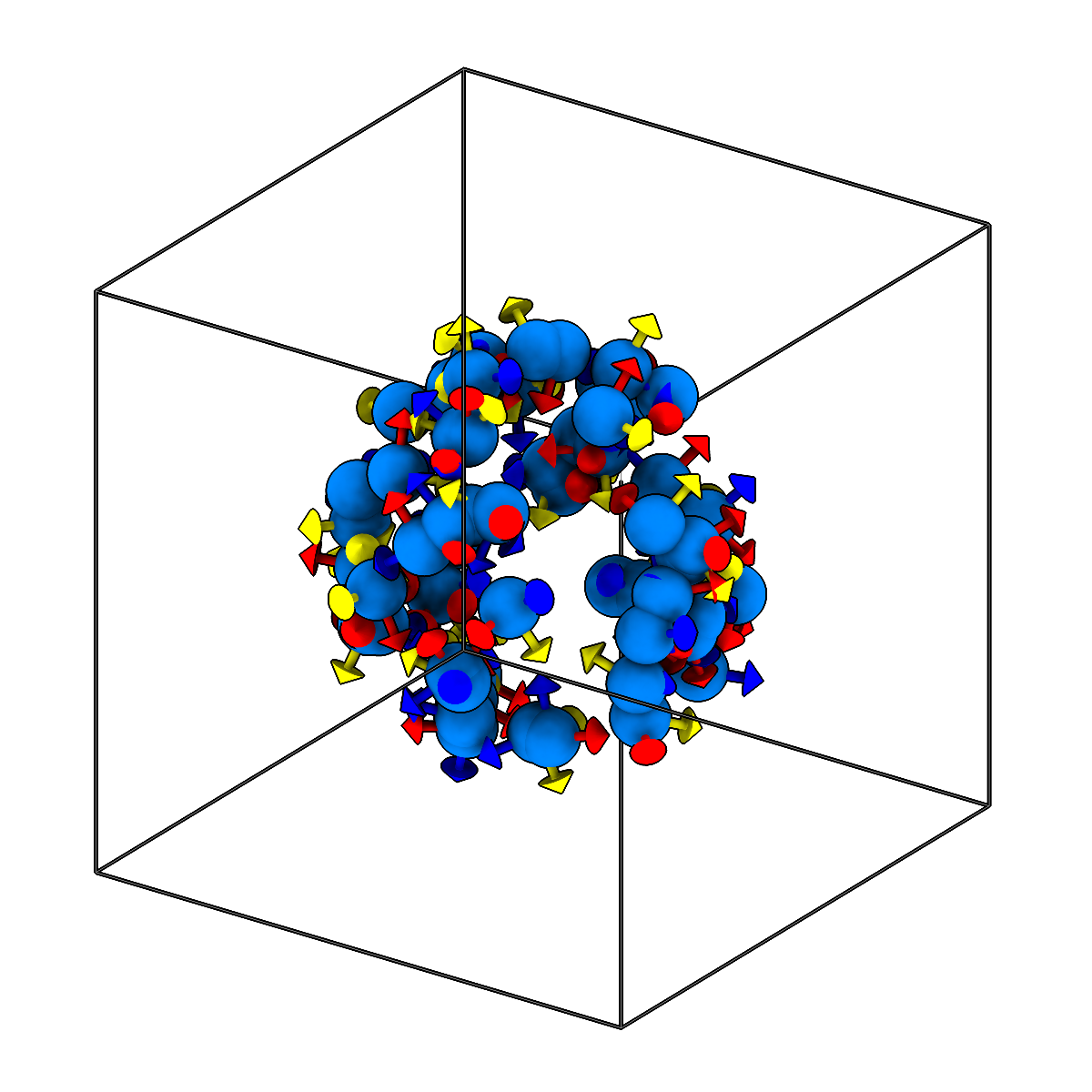
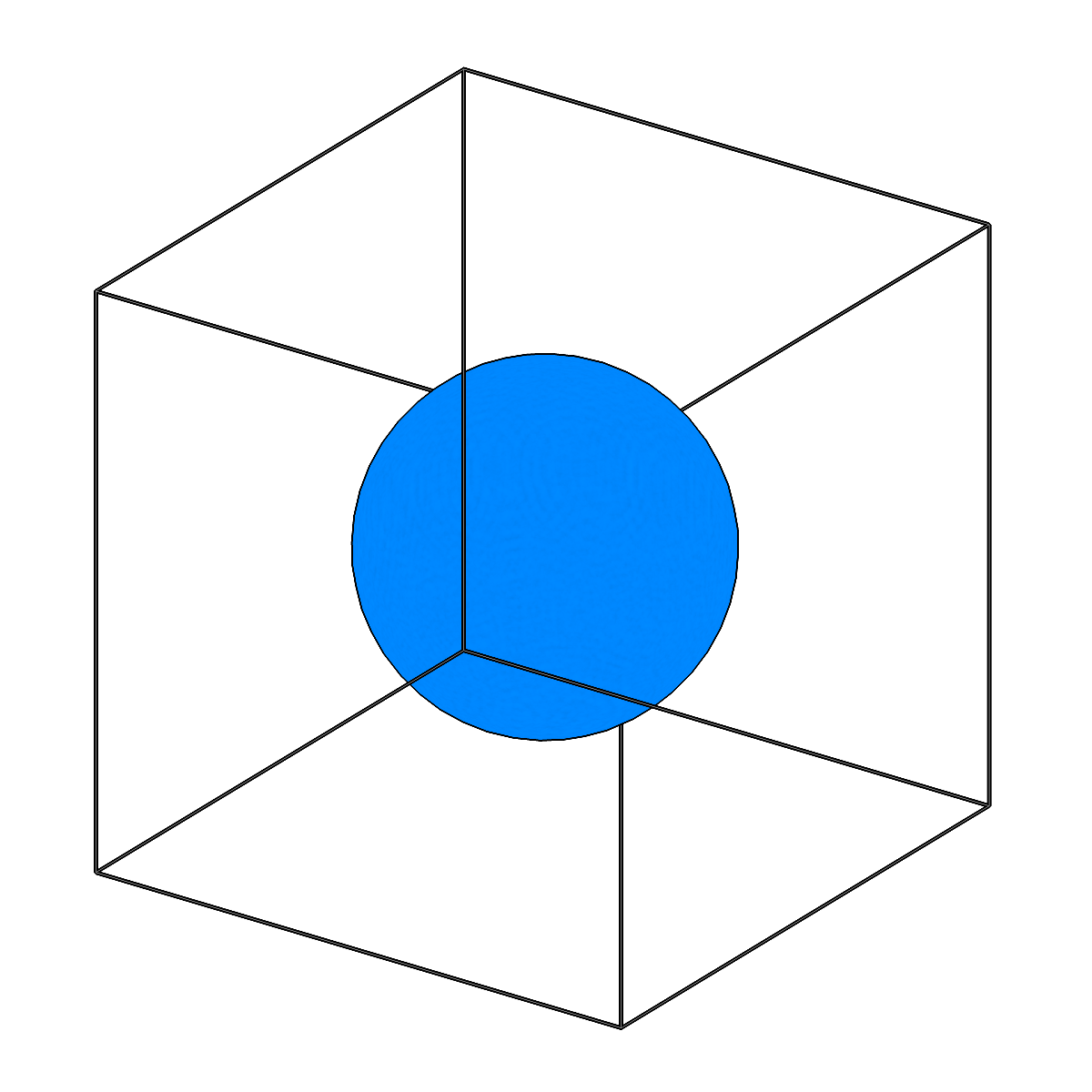
Convert picks to sphere meshes.
Usage
Description
Fits a sphere to the pick points using a least-squares fit and emits a triangulated icosphere
mesh at the fitted center and radius. The --subdivisions option controls the icosphere
tessellation, trading smoothness against face count.
When --use-clustering is set, the picks are grouped first; with --all-clusters one sphere is
fit per cluster, otherwise only the largest cluster is used. Overlapping spheres can be merged
with --deduplicate-spheres (centers closer than --min-sphere-distance, defaulting to half the
average radius, are treated as duplicates and volume-averaged). By default a single combined mesh
is written per run; --individual-meshes instead writes one mesh per sphere using the
{instance_id} placeholder in the output session id.
URI Format
Options
| Option | Type | Default | Description |
|---|---|---|---|
-c, --config |
path | — | Path to the configuration file. |
--run-names, -r |
text · multiple | — | Specific run names to process (default: all runs). Repeatable; pass -r once per run. |
--debug / --no-debug |
boolean flag | False |
Enable debug logging. |
Input Options
| Option | Type | Default | Description |
|---|---|---|---|
--input, -i |
COPICK_URI | required | Input picks URI (format: object_name:user_id/session_id). Supports glob patterns. |
Tool Options
| Option | Type | Default | Description |
|---|---|---|---|
--subdivisions |
integer | 2 |
Number of sphere subdivisions for mesh resolution. |
--deduplicate-spheres / --no-deduplicate-spheres |
boolean flag | True |
Merge overlapping spheres to avoid duplicates. |
--min-sphere-distance |
float | — | Minimum distance between sphere centers for deduplication (default: 0.5 * average radius). |
--use-clustering, -cl / --no-use-clustering |
boolean flag | False |
Cluster points before mesh creation. |
--clustering-method |
choice (dbscan | kmeans) | dbscan |
Clustering method. |
--clustering-eps |
float | 1.0 |
DBSCAN eps parameter - maximum distance between points in a cluster (in angstroms). |
--clustering-min-samples |
integer | 3 |
DBSCAN min_samples parameter. |
--clustering-n-clusters |
integer | 1 |
K-means n_clusters parameter. |
--all-clusters, -mm / --largest-cluster-only |
boolean flag | True |
Use all clusters (True) or only the largest cluster (False). |
--workers, -w |
integer | 8 |
Number of worker processes. |
Output Options
| Option | Type | Default | Description |
|---|---|---|---|
--output, -o |
COPICK_URI | required | Output mesh URI. Supports smart defaults (e.g., "membrane", "membrane/my-session", or "/my-session"). Full format: object_name:user_id/session_id. |
--individual-meshes, -im / --no-individual-meshes |
boolean flag | False |
Create individual meshes for each instance (enables {instance_id} placeholder). |
Examples
# Convert a single pick set to one sphere mesh
copick convert picks2sphere -i "ribosome:user1/manual-001" -o "ribosome:picks2sphere/sphere-001"

# Cluster the picks and write one sphere mesh per instance
copick convert picks2sphere --use-clustering --all-clusters --individual-meshes \
    -i "ribosome:user1/manual-001" -o "ribosome:picks2sphere/sphere-{instance_id}"

# Convert all manual picks using pattern matching
copick convert picks2sphere -i "ribosome:user1/manual-.*" -o "ribosome:picks2sphere/sphere-{input_session_id}"
See also
copick convert picks2ellipsoid— anisotropic alternative producing ellipsoid meshescopick convert picks2mesh— build a mesh from picks via convex hull or alpha shapescopick convert mesh2picks— inverse conversion, sampling picks back from a mesh